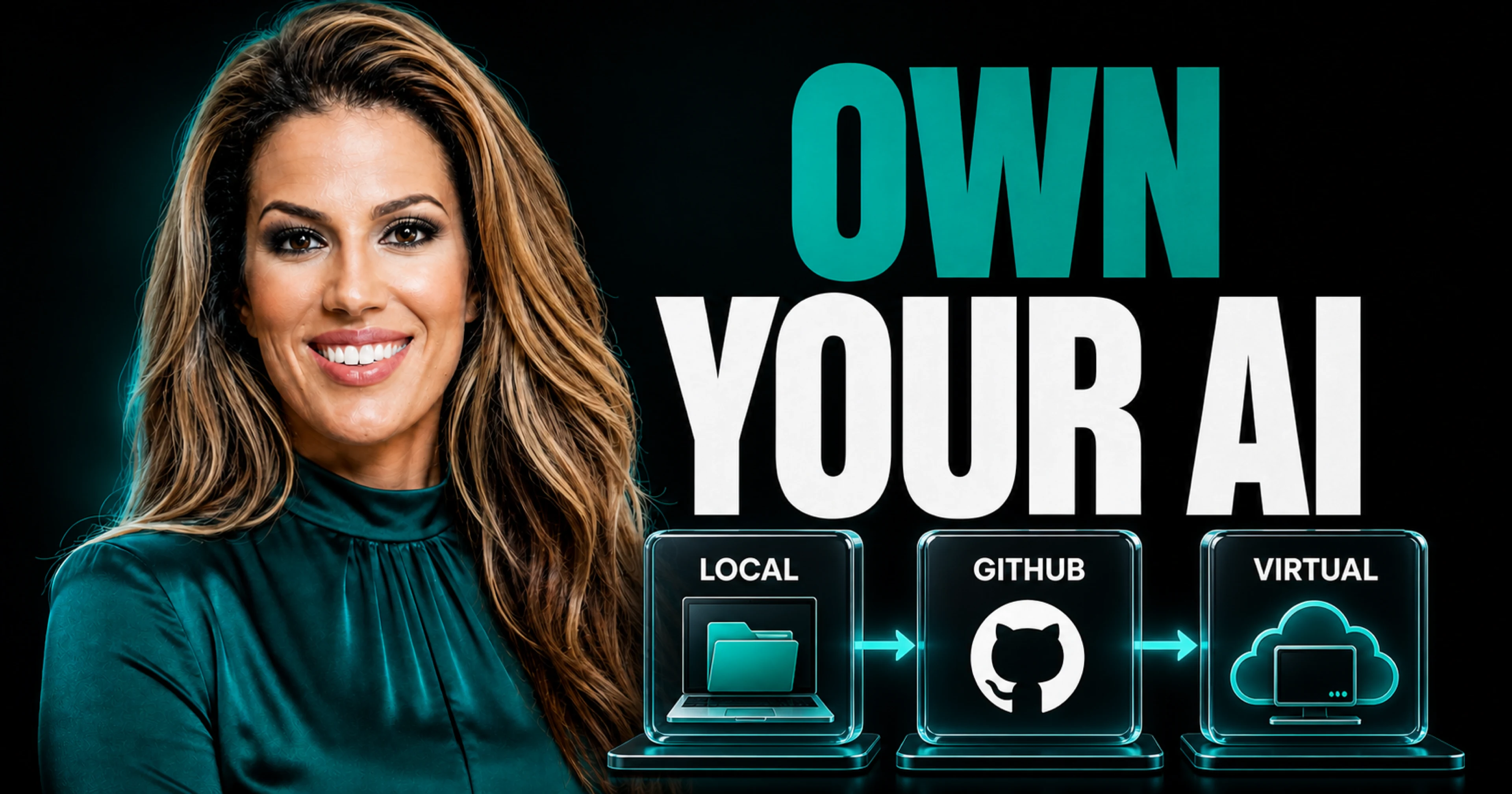
Every recommendation in my platform comparison pillar sits on top of one caveat, and this article is that caveat given its full weight:
I am answering "what should we start with" — not "what should we stay with." Because the real answer is that you should never stay model-dependent on anybody.
Run the Tape Forward Twelve Months
Picture your business a year into a serious agent rollout. You have 25, maybe 100 agents supporting operations — running hourly, daily, weekly, or on triggers. Some departments are largely carried by them; say accounting is 80% supported by agents.
Now imagine all of that is welded to one vendor's desktop app and one vendor's model. Three failure modes, none exotic:
- They unplug you. An account issue, a policy change, a product sunset — and agents that run your operations stop.
- They reprice you. If the switch would take you six months, a 10x price change is not a negotiation. It is a bill.
- They re-gate you. Access rules shift under your feet mid-cycle — not hypothetical; I documented a recent, well-papered example in Model Gating: The Fine Print.
You cannot afford any of these once agents carry real operational weight. Which is why the goal was never "pick the right vendor forever." The goal is to make the vendor replaceable.

Portability Is Not Redundancy
One distinction before the list, because these get conflated: keeping a second provider warm for the day your primary has an outage is reliability planning — a different problem with its own playbook, covered in Codex vs. Claude: Reliability in 2026.
This article is about ownership: whether the assets that make your agents yours live in your hands or inside a vendor's product. You can have perfect uptime and still be perfectly captive.
What Your Company Must Own
The test for every item: if this vendor disappeared tonight, would this asset still exist, readable, in something we control?
- Your business rules and SOPs. How you price, how you qualify a lead, what tone you write in, what requires human approval — written in plain files your company controls, not scattered across chat histories inside one product.
- Your agent instructions. Every agent's role, boundaries, standing orders, and escalation rules as portable documents. If your only copy of "how the invoicing agent behaves" is a configuration inside one vendor's app, you don't own that agent — you rent it.
- Your credentials and access routes. API keys and connections held in a credential manager you run, granted to whichever agent needs them. The vendor's plugin store is a convenience layer, never the system of record for access. (This is also basic security discipline: my plugins guide covers safe connection patterns.)
- Your business context. The facts every agent needs — who you are, who your clients are, what you sell, what was decided last quarter — in one company-owned home that any new agent can read on day one. New agent, any vendor, full context in minutes: that is the capability that makes switching real.
- Your work history and logs. The record of what agents did, when, and why — the work trails — stored where you can query them six months later, on any platform, even one you have since left.
Own those five, and "the model" becomes what it should have been all along: an engine you swap, not a building you live in.
What This Looks Like in Practice
The businesses I work with converge on the same shape: a company-owned home base of plain files — rules, instructions, context, logs — that every agent, on every platform, reads before it works and writes to after. When we bring a new agent online, it doesn't start from a blank chat; it starts from the company's memory. When an owner asks "which agent touched this client file in March?", the answer comes from their records, not a vendor's export tool.
None of that requires a developer. It requires deciding, early, that the durable part of your AI operation is the part you own.
Sequence It Honestly
You do not need this on day one — trying to build vendor-independence before your team has run a single agent is how rollouts stall. The honest sequence:
- Start on the platform your team can actually adopt (the pillar's whole argument).
- From the first month, keep rules, instructions, and context in your own files even while living happily on one platform — ownership costs almost nothing when you start early and a migration project when you start late.
- By the time agents carry real operational weight, the portability test should pass: could we move the essential agents to another provider in weeks, not quarters?
Start with one vendor. Own your infrastructure from week one. Stay because you choose to — never because you can't leave.
Sources
This article is the author's operating thesis; the factual claims it leans on (model access changes, reliability history) are sourced in the linked internal guides.