First, what is Navier-Stokes?
It is a set of equations describing how liquids and gases move. Think water flowing through a pipe, air moving around an airplane, or smoke swirling through a room.
The famous math problem asks whether a smooth flow will always stay mathematically well behaved, or whether the equations can develop a breakdown. This is about the limits of the mathematical description, not water suddenly exploding.
Who is who in this story
Ten names come up repeatedly. Here they are in one place.
 Tristan Buckmaster
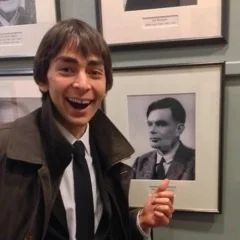 Levent Alpöge
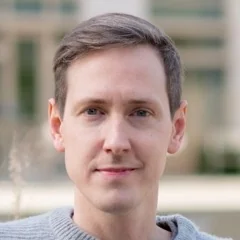 Sébastien Bubeck
 Sam Altman
 Andrew Curran
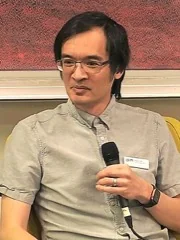 Terence Tao
Where this drama started
Trace it back and the story begins with a rumor, not with a proof. Here is the chain as the participants themselves describe it.
- A year of quiet work. Buckmaster and Alpöge spent about a year on fluid equations as a personal side project, with no institution behind it. They used Codex and Claude, and every draft went into Codex sessions Buckmaster paid for himself. On August 15 they got their big result, blowup with a smooth force for Euler, and had Lean verify it on August 22. They told almost nobody. They planned to polish the papers for weeks before posting.
- The rumor leaves the room. Alpöge works at Anthropic and had been posting mathematical hints on X. Bubeck says those posts, which OpenAI read as representing Anthropic and using Anthropic’s internal models, plus a post reading “augustus mirabilis,” led OpenAI to believe Anthropic had solved at least one Millennium problem and would announce soon. Buckmaster heard the same rumor from a colleague at NYU, who heard it from an analyst in the UK. Nobody has identified who first passed it along.
- September 1: OpenAI starts racing a rumor. OpenAI says it heard that two Millennium problems had been solved and, that same day, pointed its new internal model at every open Millennium problem. Altman later put it in one sentence: “we tried this because there were rumors on the internet last week that Anthropic’s models had solved a millennium problem and we were curious if ours could do it too.”
- September 2 and 3: the mathematicians reach out first. Alpöge messaged an OpenAI employee on Wednesday night to say the project was personal and that competing against paying customers “would look terrible.” Buckmaster emailed the next day so OpenAI would “have the facts.” The reply asked for details “to avoid competing here.”
- September 4: the public catches up. Andrew Curran’s late-night prediction that Claude had solved Navier-Stokes went viral. It was a guess, posted three days after OpenAI had already started.
- September 6: the calls. With its proof finished and Lean-verified that day, OpenAI asked Buckmaster to talk “at any point today.” What happened on those two calls is the disagreement the rest of this article is about.
So the drama did not start with anyone reading anyone’s files. It started with a rumor about who had solved what, a company deciding to race that rumor, and two mathematicians who found out they were being raced while they were still writing.
Now imagine using a paid AI tool to develop something your business plans to sell, like a consulting method or new software. You share private drafts so the tool can help improve them. Then the company behind that tool announces a breakthrough in the same area before you release your work.
That is the concern at the center of the Navier-Stokes dispute. It is also why a story about fluid equations suddenly matters to anyone putting private research, pricing methods, or unfinished products into AI tools.
OpenAI says its internal AI system produced a solution to the Navier-Stokes Millennium Prize Problem. Two mathematicians had spent about a year on related work with Claude and Codex, putting every draft into Codex sessions on tools Buckmaster says he paid for from his own research funds. Their subsequent disagreement with OpenAI spilled into public statements, accusations about the handling of credit, and competing explanations of a tense call.
The records reviewed here do not establish that OpenAI took their private work. They do establish a dispute worth understanding beyond the headline.
Editorial summary · verified September 9, 2026 · original linked above
OpenAI announces a claimed solution produced by agents using an internal model more capable than GPT-6 Astra.
The math you need to follow the fight
Euler is Navier-Stokes without viscosity, the internal friction that smooths a fluid out. Proving a breakdown for Euler is a major result on its own, and it settles nothing about the prize problem, because viscosity is exactly what a Navier-Stokes proof has to overcome.
“Forced” means an outside push is applied to the fluid. Clay’s official problem statement lists four versions. Versions A and B ask you to prove smooth flow always survives. Versions C and D ask you to build a breakdown, and they allow a smooth external force. The headline results on both sides involve a force.
Here is the overlap that matters. Buckmaster and Alpöge proved forced blowup for Euler. OpenAI’s own Euler result, produced first by about 100 agents over 50 hours, is the unforced version. OpenAI’s Navier-Stokes proof then uses a smooth force, establishing versions C and D. Buckmaster writes that the smooth-force route was the one “almost nobody else” was working on, so hearing “forced” from OpenAI was, in his words, “a bright red flag.” OpenAI’s answer is that it prompted separate groups of agents with all four versions at once, so a forced attempt was in the plan from the start.
Two more facts frame the headline. Clay requires publication in a qualifying outlet, a two-year wait, and general acceptance by the mathematics community before it considers any proposed solution. And OpenAI states in its announcement that it does not intend to claim the Millennium Prize for this result.
How a private research project became a race
August 15–22
Two researchers say they made progress with AI help.
Here is what Buckmaster’s statement means in ordinary language:
- They found a mathematical breakdown. Buckmaster and Alpöge report cases where related fluid equations stop behaving smoothly. “Blowup” is the technical name for that breakdown, not a physical explosion.
- They used software to check the proof. Lean is a proof-checking program. It checks that the formally written steps follow from the stated assumptions. That does not mean every broader claim about the work has been settled.
- AI helped them do the research. They used Claude and Codex to assist with the work. It was not simply an AI answering one question without researchers directing it.
- Other mathematicians laid the groundwork. Diego Córdoba and Luis Martínez-Zoroa developed the approach the pair built on.
- This was a personal collaboration, on paid tools. Alpöge works at Anthropic, the company behind Claude. Buckmaster says neither employer ran the project, and that he paid for the tools out of his own research funds, including what he calls a large bill to OpenAI.
September 1
OpenAI hears a rumor and starts work.
OpenAI dates its effort to September 1, after rumors of two Millennium Problem solutions. It describes testing multiple problems and formulations before concentrating resources on Navier-Stokes.
September 2
Alpöge messages OpenAI first.
By his own account, Alpöge contacted an OpenAI employee on Wednesday night. He says he had heard OpenAI held information about his work and had “spun up a group to try to compete,” and that he stressed the project was a year-old personal collaboration by happy Codex and Claude users. His warning: “it would look terrible if OpenAI were competing against mathematician consumers.” Bubeck’s version is one line: “Levent reached out unprompted to an OpenAI employee on Wednesday.”
Editorial summary · verified September 9, 2026 · original linked above
Alpöge says he contacted OpenAI on the night of September 2, lists the six points he made, and describes the week from his side.
September 3
Buckmaster emails, and gets an offer of compute.
Buckmaster wrote to an OpenAI mathematician the next day. His statement prints the email in full. He explains the rumor chain, says the work is personal, and adds that he pays for the tools “out of my own research funds, including footing a large bill to OpenAI.” He writes that he is contacting them privately “so that you have the facts to address this on your end.” The reply came the same day: details “would be useful to avoid competing here,” and “if there is anything in terms of compute from OpenAI’s end we would be happy to provide it.”
September 4, 10:26 PM
A prediction becomes a viral story.
Late on Friday night, Andrew Curran, an AI commentator on X, predicts that Claude has solved Navier-Stokes and that Anthropic will announce it before its IPO. The post is dated September 5 for most readers outside the Americas. He frames it as a prediction. It is not a proof, an official Anthropic announcement, or evidence of expert approval.
Editorial summary · verified September 9, 2026 · original linked above
Curran predicts a Claude solution to Navier-Stokes. The post itself does not substantiate the prediction.
September 5–6: thousands of agents, working in parallel
This was not one chatbot answering one question. OpenAI describes a coordinated research effort with roughly 10,000 AI agents in the successful group. Think of many software workers trying approaches at the same time, not 10,000 human researchers.
According to OpenAI’s methods report, the result arrived after about 88 hours. Turning the proof into Lean’s formal language and checking it took another 17 hours: about 105 hours altogether, or 4 days and 9 hours.
Editorial summary · verified September 9, 2026 · original linked above
OpenAI reports an 88-hour effort involving around 10,000 coordinating agents.
Editorial summary · verified September 9, 2026 · original linked above
Bubeck describes trying multiple problems with different multiagent techniques and explains the team’s role.
What would that amount of AI output cost?
OpenAI’s actual cost is not disclosed in the sources reviewed. But its report supplies token counts. Tokens are small pieces of text or code that models process and generate. They give us a better comparison than simply counting agents.
For illustration only, apply GPT-6 Astra’s published standard output price of $50 per million tokens to the reported output volumes:
| Scope | Reported output | Output-only comparison |
|---|---|---|
| Navier-Stokes effort | 130 billion tokens | $6.5 million |
| All attempted problems, including Navier-Stokes | 300 billion tokens | $15 million |
The calculation is 130 billion ÷ 1 million × $50 = $6.5 million. The $15 million figure already includes the Navier-Stokes effort.
For a business owner the lesson is simpler than the arithmetic. A result delivered in four days can still consume an enormous amount of computing. Before letting agents run in parallel, set a spending cap and a stopping rule, then measure cost per useful, reviewed result.
September 6
Two calls on a Sunday afternoon.
Buckmaster says he was asked at 12:45 whether he could meet “at any point today,” after twice proposing the following week. He and Bubeck spoke twice that afternoon with the OpenAI mathematician he had emailed. Alpöge was on neither call. What was said is the subject of the next section.
September 7
The researchers publish early, and apologize for the writing.
That evening Buckmaster posted three papers and a Lean formalization: finite-time blowup with smooth forcing for the incompressible porous medium equation, for Boussinesq, and for 3D incompressible Euler, with the Lean proofs on GitHub. His statement says the Euler writeup “can only be described as AI slop,” apologizes for it, and blames the rush on outside pressure. Within hours Terence Tao called the work “a remarkable achievement.”
September 8
OpenAI announces. The fight moves to X.
OpenAI published the announcement, the proof, and a methods report at 1:20 PM Eastern. Everything that followed happened in the next 43 minutes. Read down the posts in order.
1:20 PM · OpenAI
Editorial summary · verified September 9, 2026 · original linked above
OpenAI announces a claimed solution produced by agents using an internal model more capable than GPT-6 Astra.
1:23 PM · OpenAI
Editorial summary · verified September 9, 2026 · original linked above
OpenAI denies direct access to the researchers’ work, but leaves open a possible contribution to model improvement through de-identified product-usage data.
1:39 PM · Sébastien Bubeck, OpenAI
Editorial summary · verified September 9, 2026 · original linked above
Bubeck disputes the authorship account, explains the Anthropic-employment remark, and apologizes for the career remark.
1:57 PM · Levent Alpöge
Editorial summary · verified September 9, 2026 · original linked above
Alpöge says he was willing to collaborate but believed the conversation had already settled against his inclusion.
2:02 PM · Sam Altman, OpenAI CEO
Editorial summary · verified September 9, 2026 · original linked above
Altman defends OpenAI’s conduct and describes the intended coordination, while acknowledging the competitive rumor as motivation.
2:03 PM · Sébastien Bubeck
Editorial summary · verified September 9, 2026 · original linked above
Bubeck denies that the outcome was locked and says further discussions were possible.
Every X post in this story, in order
Ten posts carry the public argument. Here is who posted what, and when. Times are US Eastern, taken from each post’s own timestamp, and every row links to the original. The full posts are embedded in the sections that follow.
| # | When (ET) | Who | What it says |
|---|---|---|---|
| 1 | Fri Sep 4, 10:26 PM | Andrew CurranAI commentator, @AndrewCurran_ | Predicts, in his words, that “Claude has solved Navier–Stokes,” that it is out for expert review, and that Anthropic will announce it before its IPO. A prediction, not a report. Original ↗ |
| 2 | Tue Sep 8, 1:20 PM | OpenAICompany account, @OpenAI | Announces “a solution to the Navier-Stokes Millennium Prize Problem,” produced by “a group of agents, using an OpenAI next-generation model significantly more capable than GPT-6 Astra.” Original ↗ |
| 3 | Tue Sep 8, 1:20 PM | OpenAISecond post in the same thread | Says the internal model group “arrived at the Navier–Stokes solution in 88 hours, using around 10,000 coordinating AI agents.” Original ↗ |
| 4 | Tue Sep 8, 1:23 PM | OpenAIThe data statement | Congratulates Alpöge and Buckmaster. Says OpenAI “did not see any of their work through any means until they released it publicly,” that “no specific user data was accessed,” and that “while unlikely, we cannot rule out that de-identified data derived from their usage of our products helped improve our models.” Original ↗ |
| 5 | Tue Sep 8, 1:39 PM | Sébastien BubeckOpenAI researcher, @SebastienBubeck | Four numbered points. He “never ever asked for Levent to be removed from authorship of his own work,” explains the Anthropic-employment remark as being about a rewrite of OpenAI’s proof, and apologizes for “Why would you ruin your career?”, which he says he retracted on the spot. Original ↗ |
| 6 | Tue Sep 8, 1:39 PM | Sébastien BubeckTechnical follow-up | Says OpenAI began because of “viral twitter rumors that Anthropic had resolved 2 Millenium problems,” that the proofs differ (“forced vs unforced” in the Euler case), that Alpöge contacted an OpenAI employee first on Wednesday, and that his team had “no research-level expertise in fluid dynamics.” Original ↗ |
| 7 | Tue Sep 8, 1:57 PM | Levent AlpögeMathematician at Anthropic, @__alpoge__ | Quotes OpenAI’s “cannot rule out” sentence and writes “props to them for straight coming clean.” Says he would have been “pumped to collaborate,” but that after overhearing an offer of a Millennium Prize if he were removed from the paper, “the die had been cast and things were locked.” Original ↗ |
| 8 | Tue Sep 8, 2:02 PM | Sam AltmanOpenAI CEO, @sama | Says his team “acted with integrity and generosity throughout,” that OpenAI offered to let the pair go first and suggested they should get the prize, that “the team threatened us with unfounded accusations of plagarism,” that the approaches “appear to be different,” and that OpenAI tried the problem because of internet rumors about Anthropic. Original ↗ |
| 9 | Tue Sep 8, 2:03 PM | Sébastien BubeckReply to Alpöge | “Nothing at all was locked.” Says OpenAI was “willing to go above and beyond and have as many discussions as you would have liked,” and calls Alpöge’s account “just untrue.” Original ↗ |
| 10 | Wed Sep 9, 12:50 AM | Levent AlpögeHis account of the week | Says he contacted OpenAI on the night of Wednesday, September 2, lists the six points he made, and describes the Sunday-night walk with Buckmaster after the calls. Original ↗ |
Two things stand out once the posts are lined up. Curran’s prediction was posted late on Friday night, September 4, so it appears as September 5 in most of the world. And the entire public fight on September 8 unfolded in 43 minutes, between OpenAI’s 1:20 PM announcement and Bubeck’s 2:03 PM reply.
Where the disagreement turns personal
How the meeting got scheduled
Buckmaster asked to talk the following week. On Friday, September 4, he says he was asked whether he could meet that day, and again said the following week. At 12:45 on Sunday, September 6, he was asked whether he could meet “at any point today.” Bubeck joined. The three of them spoke twice that afternoon. Alpöge was on neither call. OpenAI’s own account places its Lean verification on September 6, the same day, and says it reached out believing the pair had also solved Navier-Stokes.
The story that changed on the call
Buckmaster says he was told an internal model had produced a roughly 100-page proof of forced blowup for Navier-Stokes. He was shown a prompt and told the model had simply been given the problem statement; Alpöge had been told “very little human input” was involved. Over the call, as colleagues sent Bubeck corrections over internal chat, he says it emerged that a whole team had worked the problem, that many problems had been tried, that the model was started on easier problems including Euler, that the prompt itself had been written with Codex, and that “an insane amount of compute” had been used. His question about when the first prompt was sent was, he says, answered only after some time: within the past few days, after word of their work reached OpenAI.
Bubeck later gave his side of the human-input question. His team “collectively had no research-level expertise in fluid dynamics” and “were unable to meaningfully contribute to the mathematical content.” Several people were involved, he says, to run multiple problems with a variety of multi-agent techniques. Both accounts can be true at once: a team without fluid-dynamics expertise can still be a team.
The data question
Buckmaster asked whether the model had been trained on, or had access to, their Codex sessions, where the pair had put every draft for the whole project. He says he was told the model did not look up user data, and that his second question, about training, went unanswered. OpenAI’s public answer arrived two days later, in the post below. Bubeck’s two posts underneath are OpenAI’s fuller replies on the same questions.
Editorial summary · verified September 9, 2026 · original linked above
OpenAI denies direct access to the researchers’ work, but leaves open a possible contribution to model improvement through de-identified product-usage data.
Editorial summary · verified September 9, 2026 · original linked above
Bubeck disputes the authorship account, explains the Anthropic-employment remark, and apologizes for the career remark.
Editorial summary · verified September 9, 2026 · original linked above
Bubeck says OpenAI began because of the rumors, did not see the pair’s work, and that his team had no research-level fluid-dynamics expertise.
The two offers
Buckmaster says two proposals followed. First: the pair post their Euler result, and OpenAI posts Navier-Stokes the next day. Second: after posting Euler, Buckmaster alone writes a paper presenting the Navier-Stokes result, acknowledging that an internal OpenAI model resolved it. He says Bubeck twice asserted he wanted Alpöge removed from authorship and said it would all be simple if only Alpöge did not work at Anthropic. He also says he was told that if OpenAI posted second, it would say the pair “deserved the Clay Prize” and were “the closest humans to the problem.” He declined both.
When Buckmaster said he would go public if OpenAI released the result as proposed, he says the response was:
“Why would you ruin your career?”
Buckmaster’s account of the call · Read the four-page statement
He says he replied that he is an academic and asked why going public would ruin his career. The answer, in his account: “If you don’t want me to be nice, then I don’t have to be nice.” Bubeck says he retracted the career remark on the spot, and he apologized for it publicly on September 8.
Some time later, Buckmaster says, Alpöge received a text proposing a one-on-one with Bubeck, with the line “I don’t know if Tristan is being fully rational right now.” Alpöge declined and said conversations should go through Buckmaster. Bubeck emailed that night asking to speak Monday. Buckmaster did not respond.
Sunday night
Alpöge filled in what the statement leaves out. Neither of them could sleep, so they walked around the city. He writes that Buckmaster “kept rock solid to his principles during the tense calls and negotiations, immediately turning down a career dream and million dollar prize for me,” and that fifteen minutes later Buckmaster had his feet up on the desk, toes showing through ripped socks. He also notes Buckmaster did all of this on little sleep, having recently had a child.
Editorial summary · verified September 9, 2026 · original linked above
Alpöge says he contacted OpenAI on September 2, lists the six points he made, and describes the Sunday night walk and Buckmaster refusing the offers on his behalf.
Buckmaster explicitly says he does not know whether their data was used. His statement is an account of events, not a finding of data theft. He also says what he would rather be discussing: the mathematics, the ideas of Córdoba and Martínez-Zoroa, and what he calls “a Deep Blue-Kasparov moment” for how the field trains students, assigns credit, and decides what deserves a human life’s attention.
There are two issues here. One concerns how the proof was produced. The other concerns how people were treated when priority and credit were discussed. Evidence that resolves one does not automatically resolve the other. Even if two proofs were independently produced, an argument about credit and pressure could still be real. Equally, a badly handled call would not itself establish that private data had been used.
The researchers released their results the day before OpenAI’s announcement. OpenAI’s account of the concurrent work recognizes their priority on forced Euler, while claiming a distinct Navier-Stokes result.
OpenAI’s response leaves one question open
On September 8, OpenAI denied that its researchers or agents saw the pair’s work before publication. It also said no specific user data was accessed to solve the problem.
But the company qualified that answer: it could not rule out de-identified data derived from the researchers’ product use having helped improve its models, although it considered that unlikely.
Editorial summary · verified September 9, 2026 · original linked above
OpenAI denies direct access to the researchers’ work, but leaves open a possible contribution to model improvement through de-identified product-usage data.
Why those two sentences are not equivalent
Direct access would mean retrieving the private material for the task. Training influence would mean earlier material helped shape the model before it was asked to solve the problem. Denying the first does not answer the second.
At the same time, “cannot rule out” does not establish that it happened. The public statement does not identify a particular training example, show that the researchers’ sessions were included, or connect such an example to the proof.
That unresolved gap explains much of the reaction. A customer wants a concrete answer about what happened to their work. A general statement about possible model improvement cannot supply that answer.
The authorship dispute: what each side is actually saying
Sébastien Bubeck’s reply makes a narrower denial than “we never discussed excluding Levent.” He says he never asked for Alpöge to be removed from authorship of Alpöge’s own work. He says he was surprised to learn on the call that the pair had solved Euler and not Navier-Stokes, and that one path discussed afterward was for Buckmaster to lead a rewrite of OpenAI’s proof. In that context, he says, he said “it would be simpler if Levent was not an Anthropic employee,” because he felt it would be inappropriate for an Anthropic employee to author OpenAI’s work.
He adds two claims of his own. He says it was admitted on the call that internal Anthropic models had been used in the pair’s Euler proof, so he could not treat Alpöge as an independent academic while OpenAI’s internal model and proof were on the table. And he says Alpöge “refused to attend any of the meetings despite my repeated asking,” so he felt he “was doing a proxy negotiation with Anthropic while the Anthropic employee refused to directly participate.” Buckmaster’s statement confirms Alpöge was on neither call and says Alpöge asked that conversations go through Buckmaster.
On the career remark, Bubeck says he was met with “a litany of slander, including direct threats” to go to the press, that Buckmaster told him “there is nothing you can do, I simply do not trust you,” and that the remark came from confusion about why “an incredible source for celebration” had become “such bickering.” He calls it “an extremely poor choice of words,” apologizes, and says he retracted it on the spot.
Editorial summary · verified September 9, 2026 · original linked above
Bubeck disputes the authorship account, explains the Anthropic-employment remark, and apologizes for the career remark.
His technical follow-up explains why OpenAI treated this as an Anthropic matter. He says Alpöge’s posts on X, which “appear to represent Anthropic and use Anthropic internal models,” and a post reading “augustus mirabilis,” led OpenAI to believe the project was “at least in part, an Anthropic project” that had solved at least one Millennium problem and would release soon. The rumor that started the race, in other words, was partly read off Alpöge’s own feed.
That makes the point of disagreement more precise: which paper was being discussed, what credit was offered, and whether the proposal was a good-faith attempt at coordination or an unacceptable condition. A screenshot-sized slogan cannot settle those questions.
Alpöge says he would have collaborated
In his September 8 reply, Alpöge opens with OpenAI’s “cannot rule out” sentence and writes, “props to them for straight coming clean.” He says he would have been “pumped to collaborate,” that he does not care about authorship on that step, and that it “coulda been me Tristan and every fte at oai for all i care.” But “on hearing the loud convo in the hallway, especially the part where a millennium prize was offered if i’d just be removed from the paper, it was kinda clear the die had been cast and things were locked.” He calls the episode “wacky, unstrategic, and unnecessary,” since on his side it was “mostly me and claude having a good time yoloing random stuff in the corner rather than anything institutional.”
Alpöge also makes a claim about the proof itself: that so far OpenAI’s argument “looks more along the lines of another Euler blowup proof we had.” Altman says the opposite, that once both were public “the approaches appear to be different.” No independent referee has tested either reading.
Editorial summary · verified September 9, 2026 · original linked above
Alpöge says he was willing to collaborate but believed the conversation had already settled against his inclusion.
Bubeck replies directly that “nothing at all was locked,” that OpenAI was “willing to go above and beyond and have as many discussions as you would have liked,” and that the claim is “just untrue.” One side describes a closed door; the other says the conversation was still open.
Editorial summary · verified September 9, 2026 · original linked above
Bubeck denies that the outcome was locked and says further discussions were possible.
The crowd weighs in
OpenAI’s data statement passed six million views within a day. The most-liked replies were not about the math. One asked whether the researchers had turned off “Improve the model for everyone” in their data controls, “because if you did and they still make this concession, that is highly concerning to every single user.” Under Alpöge’s post, a physicist wrote that two parties arriving at a result at the same time is common, but “I have never heard of one party offering lead authorship to a person from the competing party.” Those two replies are the whole story in miniature: a data question and a credit question, and neither answered.
Sam Altman backs his team
Altman’s public defense presents OpenAI as trying to coordinate generously after initially believing the researchers had also solved Navier-Stokes. He describes offers involving release priority, prize recognition, and Buckmaster’s potential role in presenting OpenAI’s proof.
He says “the team threatened us with unfounded accusations of plagarism,” defends the team’s integrity, and points to differences in the published approaches. He also concedes the origin of the race in one sentence: “It is true that we tried this because there were rumors on the internet last week that Anthropic’s models had solved a millennium problem and we were curious if ours could do it too.”
Editorial summary · verified September 9, 2026 · original linked above
Altman defends OpenAI’s conduct and describes the intended coordination, while acknowledging the competitive rumor as motivation.
What the math world is saying
The participants have done most of the talking. The most cited outside voice is Terence Tao of UCLA, the Fields Medalist who has worked on the Navier-Stokes regularity problem for years. On the evening of September 7, hours after the pair’s papers appeared, he called their work “a remarkable achievement” for pushing the Córdoba and Martínez-Zoroa approach through to forced blowup for 3D Euler, formalized in Lean, and noted that the authors “had to release far earlier than planned due to external events.” He followed with an explainer of the results on his blog.
His warning about the AI side came first. On September 3, as the rumors spread, he described a scenario in which an AI company solves the problem while it “keeps the process to arrive at that ansatz almost completely out of public view,” so that “technically, one of the most prominent open problems in mathematics would now be solved; but there would be almost no value added to mathematics as a consequence.” On September 5 he cautioned against turning the problem into “a mere viral social media post advertising some benchmark progress.”
After the announcement he went further. On September 8 he wrote that “even the rumor of someone working on a problem can trigger a massive amount of AI-powered effort to flatten it before the original research project has time to reach its full potential,” and that the incentives “may now be pointing in the direction of no longer sharing any promising research directions with the broader community.” He also criticized “the refusal of AI companies to disclose their negative results, or reveal the process towards obtaining their solutions.”
Here are his posts, in the order he wrote them.
That last point is the one a business owner should sit with. The dispute over credit will be argued out by the people involved. The incentive Tao describes, where telling anyone what you are working on invites a better-funded party to finish it first, applies to any owner with a half-built method and a paid AI subscription.
Anthropic, Alpöge’s employer, had made no public statement on the dispute as of September 9. Bubeck’s post frames the negotiation as one conducted with Anthropic by proxy; both researchers describe the project as personal.
Will this push academia toward Anthropic?
It is the question people in university departments were asking each other on September 8, and the honest answer is that the record does not support a clean brand switch. Our reading:
The tools were interchangeable in this story. Buckmaster and Alpöge used Codex and Claude side by side for a year, and Buckmaster was paying OpenAI out of his own research budget. Nothing in the public record says one model did the mathematics and the other did not. Alpöge calls his side “me and claude,” but the drafts lived in Codex sessions. Academics who read the statement carefully will notice the work was done on both.
What the dispute actually tests is vendor conduct, not model quality. The complaints are about being raced after a rumor, being pressured on a call, being asked to drop a co-author, and getting “cannot rule out” as the answer to a question about one’s own drafts. Those are questions about how a company treats the people using its product. A researcher choosing a tool after this week will ask every vendor the same three things: will you train on my unpublished work, will you compete with me, and how will you behave if we end up on the same problem.
Anthropic has not earned the switch by anything it said. It has made no statement. Its employee’s hints on X are part of how the rumor started, by Bubeck’s account. If academics drift toward Anthropic, it will be because OpenAI’s answer left a gap, not because Anthropic filled it.
The stronger signal is toward sharing less, with everyone. Tao’s September 8 point is the one that will shape behavior: if telling anyone what you are working on invites a better-funded party to finish it first, the rational move is silence, and silence is bad for mathematics regardless of which company you subscribe to. Expect more researchers to ask their universities for institutional agreements with no-training terms in writing, and more to keep the sensitive part of a project off any hosted tool until it is ready to post.
That is a workable answer for a mathematician with a department behind them. Now the question that matters here.
What does this have to do with us non-technical SMBs?
This is one of the first questions business owners ask me about AI. And when you have spent years building a company, it is a reasonable question.
Your valuable information is not necessarily a patent or a scientific discovery. It might be how you price a job, which customers are most profitable, the process your team uses to deliver results, or the proposal that helps you win against a competitor.
An established business has years of experience captured in those documents. When you give an AI access to them, you are trusting another company with part of what makes your business valuable.
The researchers were using AI tools to develop unpublished work. When OpenAI announced a related breakthrough, questions followed about whether their private work could have influenced its models. The public record does not establish that OpenAI took their research. But the uncertainty touches the exact concern business owners raise: what happens to the information I give these tools?
“Safe” means more than “Will it train on my data?”
- Will my information be used to improve the provider’s models?
- Who can access it, including coworkers or connected services?
- How long will copies be kept, and what happens when I delete something?
- Could an agent share it or act on it without my approval?
Those are different risks. A promise about model training does not, by itself, answer all four.
Before connecting your customer records, pricing spreadsheets, or internal processes, ask whoever is setting up your AI: “Show me which company account we are using, what happens to our data, which files the agent can access, and what it can do without asking us.”
Three moves for anyone using the ChatGPT desktop app or Codex
Buckmaster was a paying customer whose drafts sat in Codex sessions. OpenAI’s answer to him was that no user data was looked up, and that de-identified usage data helping improve its models could not be ruled out. Plan for the second sentence, not the first.
- Pick the account that holds company work, then check its training setting. On a personal Free, Plus, or Pro account, open Settings, then Data Controls, and turn off “Improve the model for everyone.” OpenAI says the setting applies to the whole account, on every device; confirm in your plan’s terms that it covers your Codex sessions too. Step-by-step screenshots for both settings are in Two Steps to Stop ChatGPT From Training on Your Data. For a permanent opt-out that survives future setting changes, file a “Do not train on my content” request through OpenAI’s Privacy Portal; it applies to personal ChatGPT accounts, not business workspaces or the API. On a Business, Enterprise, or Edu workspace, OpenAI does not train on workspace data by default. Proprietary work belongs on the workspace with that default and an administrator who can see the settings.
- Treat “local” as “sent.” OpenAI’s security documentation says local execution “does not mean offline or device-only model inference,” and that file excerpts, prompts, screenshots, browser content, and tool results may be sent to OpenAI to complete a task. Decide what is in a folder before you point the agent at it. Keep pricing logic, client lists, and unfinished methods in a folder the agent never sees unless the task needs them, and hand it a sanitized excerpt when it does. A prompt that says “keep this confidential” does not change the provider’s terms.
- Keep your own dated record of valuable work. Buckmaster could show what he had, and when, because he had a Lean-verified proof dated August 22 and an email dated September 3. Save dated drafts and source notes in company-controlled storage, not only in chat history. OpenAI’s own documentation warns that not every local file operation, screenshot, or browser action appears in its compliance logs, so your record is the complete one. Check what each connected app receives too; a connector follows the source system’s rules, not the chat’s.
Paste this into your AI tool first
I am about to use this account for confidential company work. Before I do, answer in plain language:
1. Which plan and workspace am I signed into right now?
2. Under this plan, are my conversations, uploaded files, or Codex sessions used to train or improve your models by default? Where exactly do I turn that off?
3. How long are my conversations, files, and agent task records kept after I delete them?
4. When you work on files on my computer, what leaves my computer?
5. Which connected apps or tools can this account reach, and what do they receive?
Cite the official documentation page for each answer.
Then check the answers against the linked documentation. A model can misdescribe its own terms.
Longer term: how to think about models and your data
Every prompt is a disclosure to a company with its own interests, one that may compete in your category tomorrow or be racing someone in it today. Price that the way you would price handing a draft to a consultant who also serves your rivals.
Separate access from influence. Direct access means someone retrieved your file. Training influence means your earlier material shaped the model. Vendors deny the first firmly and hedge the second. Ask about the second in writing before it matters.
The useful question is where the work goes. Plan tier, workspace, retention window, connected apps, and admin controls decide what happens to data. The product name decides nothing. OpenAI’s documentation says deleting a conversation “doesn’t immediately purge every related artifact.” Expect that pattern from every provider.
Match sensitivity to tier. Routine work can run anywhere. Work that is the business, meaning methods, pricing, unreleased offers, and client data, belongs on a tier with no-training defaults, a retention window you have read, and an export path. Some work stays inside the company entirely.
Assume the gap between “cannot rule out” and “did not” will stay open. Vendors can rarely prove a negative about training data. Governance happens before the material enters the system, because afterward a general statement is the best answer you will get.
The more valuable the work you give an AI, the more clearly you should be able to explain where it goes.
Questions business owners are asking
Did OpenAI take the mathematicians’ work out of Codex?
Nothing in the public record establishes that. OpenAI says neither its researchers nor its agents saw the pair’s work before it was published, and that no specific user data was looked up to solve the problem. In the same statement it says it cannot rule out that de-identified data from the pair’s product use helped improve its models. Buckmaster says plainly that he does not know whether their data was used. So the honest answer is: direct access is denied, indirect influence is unresolved, and no independent party has examined either.
Did Claude solve Navier-Stokes?
No. The viral September 4 post was a prediction, and its central claim did not come true. Buckmaster and Alpöge used Claude and Codex to help prove that three related fluid equations, including 3D Euler with a smooth force, can break down in finite time. Those are important results in their own right, and Terence Tao called them a remarkable achievement, but they are steps toward the prize problem rather than a solution to it.
Has OpenAI won the $1 million prize?
No, and it says it will not ask for it. OpenAI’s announcement states that it does not intend to claim the Millennium Prize. Even if it did, the Clay Mathematics Institute requires a proposed solution to be published in a qualifying outlet, to wait at least two years, and to gain general acceptance in the mathematics community before it is considered. Think of the announcement as a company reporting a result, and the prize as a separate review that has not started.
Is the regular ChatGPT desktop app or Codex safe for company information?
It depends on the account, and the product name tells you nothing. On a personal Free, Plus, or Pro account, your conversations can be used to improve OpenAI’s models unless you turn off “Improve the model for everyone” in Data Controls. On a Business, Enterprise, or Edu workspace, OpenAI does not train on workspace data by default. In every case, working on files on your computer still sends excerpts, prompts, and screenshots to OpenAI to complete the task. Put the confidential work on the account with the right defaults, limit what the agent can see, and keep your own dated copies.
What has Anthropic said?
As of September 9, we found no public statement from Anthropic on the dispute. Alpöge works there, and both researchers describe the project as a personal collaboration with no employer involvement. Bubeck’s post frames the negotiation as one conducted with Anthropic by proxy, which Alpöge disputes by describing his side as “me and Claude” in a corner.
Sources and original posts
Primary sources first. Claims about private calls are attributed to the person making them. A post establishes what someone said in public, not that every disputed statement in it is true.
Participants
- OpenAI’s research announcement, proof, and methods · Announcement on X · Data-use statement
- Tristan Buckmaster’s four-page statement · Release post, September 7
- The researchers’ papers: 3D incompressible Euler · Boussinesq · Incompressible porous medium · Lean formalizations (GitHub)
- Sébastien Bubeck’s response · Technical follow-up · Counter-reply
- Levent Alpöge’s response · His September 9 account of the week
- Sam Altman’s defense
- Andrew Curran’s September 4 prediction
Independent voices and rules
- Terence Tao: “A remarkable achievement” (September 7) · Blog explainer of the results · September 3 thread on AI and open problems · September 5 clarification · September 8 thread
- Portraits: X profile images of the posters; Tristan Buckmaster’s NYU page; Terence Tao by IPAM (Wikimedia Commons).
- Clay Mathematics Institute prize rules
- Coverage: TechCrunch · Fortune · Axios · CNN
_(cropped).jpg)
Data-control documentation
- ChatGPT Data Controls FAQ (personal plans) · OpenAI Privacy Portal: “Do not train on my content” request
- ChatGPT Work cloud security · ChatGPT Work local security (workspaces, what leaves the device)
- OpenAI API data controls · GPT-6 Astra pricing
Draft reviewed September 9, 2026. Every link above was opened on that date. X controls the contents and availability of the embedded posts; each embed carries a permanent source link and a dated editorial summary in case a post is removed.