Short answer: On the night of Sunday, September 20, Amazon began showing people who shop through Meta's Muse agent a notice that "continued access by an unauthorized AI agent" violates its Conditions of Use. Amazon says Meta never told it Muse would use the store, that the agent does not identify itself, and that it appears to store customer credentials. Meta says Muse cannot see passwords or payment methods. This is the third time in a year Amazon has pushed an outside agent off its site, and the first time the agent came from a company it does billions of dollars of business with. Amazon can afford to keep agents out because it sells ads to the shoppers it keeps. Your business sells to whoever shows up, and more of them are about to show up as an agent.
I run a business that lives on being found. So do most of the owners I work with. That is why a fight between two trillion-dollar companies over a shopping bot is worth twenty minutes of your day. The people you sell to are starting to send software to do their buying, and the biggest store in the world just decided how it will treat that software. You will have to decide too, and you do not have Amazon's reasons.
Here is the whole story from the original posts and documents, then what it means for a company your size.
What happened, in order
Tuesday, September 8
Meta launches Muse, an agent that shops and pays.
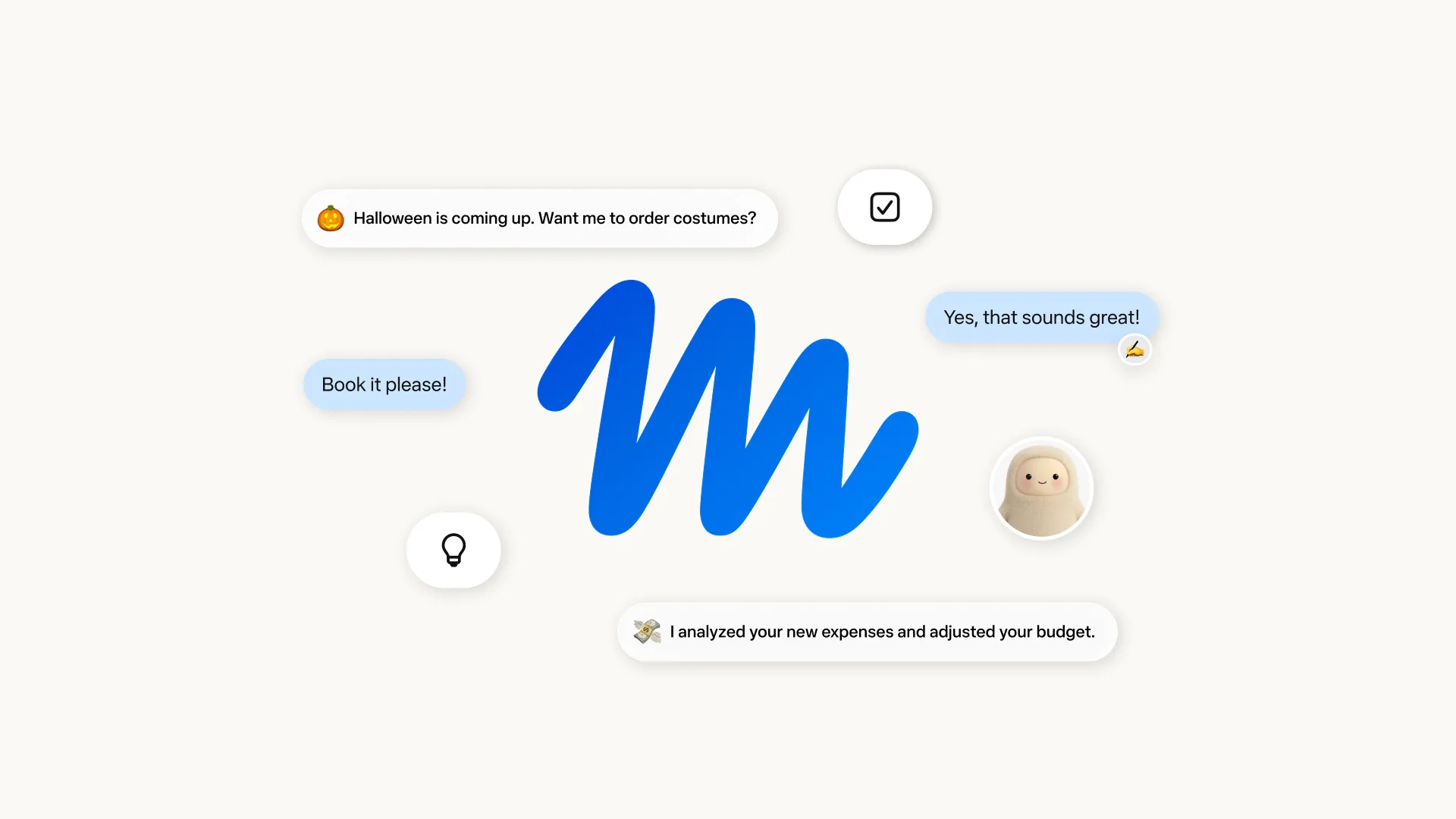
Meta's launch announcement describes Muse as a personal AI agent that can send email, book travel, manage shopping, and work in the background on longer goals. Two design choices matter for this story. Meta says Muse "checks with the person before sensitive actions like sending an email or making a purchase," and that it pays through Link by Stripe using "a one-time-use card so your real card details stay hidden." On credentials, Meta's exact words: "Muse has no visibility into people's passwords or payment methods. Any credentials a person shares go into secure storage, so Muse can use them without seeing them." Muse launched in the United States on iOS, Android, and the web, free for basic use with paid plans.
Between September 8 and September 20
Amazon asks Meta to keep Amazon out of Muse.
Amazon told reporters it had "requested that Meta remove Amazon from the experience" before it did anything technical. No date for that request has been published. Amazon's complaints, as quoted by The Register and Engadget: Meta did not tell Amazon that Muse would access the store, the agent does not identify itself when it browses, and it appears to capture and store customer credentials. Growth Academy found no Amazon-published statement or help page on the block as of September 21, so every Amazon quote in this article comes from those reports.
Sunday night, September 20
The notice appears at checkout.
Twelve days after launch, people who tried to complete an Amazon purchase through Muse started seeing a message, quoted the same way by Engadget and by Quartz:
"Continued access by an unauthorized AI agent violates Amazon's Conditions of Use, to which our customers have agreed."
Amazon's notice to Muse users, as reported September 21, 2026
Note what the sentence leans on. Amazon's claim is contractual: you, the customer, agreed to its terms, and your agent is breaking them on your behalf. That framing was chosen for a reason, and the reason is in a court opinion from August, covered below.
Monday, September 21
Amazon explains. Meta answers. X piles on.
Amazon's statement, as quoted by The Register: "We think it's fairly straightforward that third-party applications that offer to make purchases on behalf of customers from other businesses should operate openly and respect service provider decisions about whether or not to participate." It added that this "is how others operate including food delivery apps and the restaurants they take orders for, delivery services apps and the stores they shop from, and online travel agencies and the airlines they book tickets with for customers."
Meta's response repeated the credentials sentence from its launch page: Muse "has no visibility into people's passwords or payment methods," and credentials go into secure storage. The two companies are not strangers. Bloomberg and Quartz both note that Amazon products have been purchasable inside Facebook and Instagram since 2023, and that Meta signed a multibillion-dollar deal in April to run AI workloads on Amazon's chips. Amazon blocked the agent anyway.
By 8:29 AM Eastern the story had a headline that stuck. The investor who posts as BuccoCapital Bloke called it a "digital knife fight," and by mid-afternoon his post had passed a million views. Read the four posts below in order. They are the argument in miniature.
Editorial summary · verified September 21, 2026 · original linked above
"Amazon cuts off Muse. While I am bullish Meta and Muse, I think many people are overlooking the digital knife fight that's about to occur. Nobody wants to get commoditized or layered here. Let the games begin."
Editorial summary · verified September 21, 2026 · original linked above
"This seems shortsided. I've been ordering groceries via Muse, and would figure that easier shopping = more spending."
Editorial summary · verified September 21, 2026 · original linked above
"don't understand why Amazon is anti-agents using them. that's how you know they've lost customer centricity - they care more about the ad revenue in the marketplace than actually enabling people to buy things easily."
Editorial summary · verified September 21, 2026 · original linked above
"Amazon won't be able to tell whether the buyer is a human or an AI acting on their behalf if access is via the user's IP address & cookies."
Why Amazon is fighting this, in its own documents
Muse is the third agent Amazon has pushed off its site in a year, and the record shows a company that has thought hard about how to do it.
The lawsuit that told Amazon which tool to use
Amazon sued Perplexity in November 2025 over Comet, a browser whose assistant could shop on Amazon at the user's direction. In March 2026 a federal district judge granted Amazon a preliminary injunction under the Computer Fraud and Abuse Act. On August 4, 2026, the Ninth Circuit vacated that injunction. The court's reasoning is the sentence every business owner should read: "It is the user who 'accesses' Amazon's computers, with the help of the Assistant to carry out specific acts on Amazon.com." The agent, in the court's words, "is a tool, not a person for statutory purposes."
Then the footnote that explains the Muse notice. The panel wrote that its outcome "does not impair Amazon's ability to regulate access to Amazon.com via private terms of service for its users." So Amazon stopped talking about hacking laws and started talking about the Conditions of Use its customers agreed to. That is the exact wording on the Muse pop-up seven weeks later. The opinion also records that the parties dispute whether Perplexity changed its agent's user-agent string after Amazon first identified and blocked it, which is the cat-and-mouse Musk is pointing at.
The robots file that blocks everyone's agent
Amazon's position is not specific to Meta. Its public robots.txt, the file that tells automated visitors what they may read, disallows the shopping and user-action agents of every major AI company. This is the file as Growth Academy captured it on September 21, 2026:
User-agent: GPTBot
Disallow: /

User-agent: ChatGPT-User
Disallow: /

User-agent: OAI-SearchBot
Disallow: /

User-agent: GoogleAgent-Shopping
Disallow: /

User-agent: GoogleAgent-Mariner
Disallow: /

User-agent: meta-externalagent
Disallow: /

User-agent: Claude-User
Disallow: /

User-agent: Perplexity-User
Disallow: /
Source: amazon.com/robots.txt, read directly on September 21, 2026. The full file lists more than 400 lines; these are the entries for agents that browse or buy on a person's behalf. A robots.txt line is a request, not a lock, which is why Amazon also uses technical blocks and its terms.
Read that list as a policy. ChatGPT-User and Claude-User are the agents that fetch a page when a person asks a question. GoogleAgent-Shopping and meta-externalagent are shopping and task agents. Amazon says no to all of them. Muse simply did not announce itself, so it got a pop-up instead of a robots line.
The number behind Nikhil's accusation
Amazon's advertising business depends on people looking at Amazon pages. Amazon's fourth-quarter 2025 earnings release reports advertising services revenue of $21.3 billion for the quarter, up 23 percent, and the four 2025 quarters in that table add up to about $68.6 billion for the year. The same release defines the line as sponsored ads, display, and video sold to sellers and vendors. An agent that reads a product page and buys the best match never sees a sponsored placement. Nobody at Amazon has said the block is about ads. Nobody has to.
What this has to do with a 5 to 25 person firm
Here is the mistake I do not want you to make: reading this as a big-company story and copying Amazon's answer. Amazon is protecting a $68 billion advertising business and a customer relationship it already owns. You own neither. Your whole problem is being found and chosen, and the agent your customer sends is a buyer standing at your door with the customer's list and the customer's card.
Four things follow.
1. The demand is early, and it is already real.
NIQ's survey of about 500 US consumers, published May 5, 2026, found 42 percent now use AI tools to shop, and 5 percent have already let a fully autonomous agent place an order. Checkout.com's six-market study, published June 9, 2026, found a third of consumers expect at least a tenth of their purchases to be AI-driven within a year, while a quarter say they will never delegate a purchase. The controls people want before they hand over spending are spending caps, instant revocation, and easy cancellation. Kevin Stevens, above, is already buying groceries this way. Your customers are on that same curve, a few steps behind him.
2. Amazon made the decision for its marketplace. You still get to make yours.
If you sell on Amazon, a customer who asks Muse to buy your product there now hits Amazon's notice, and every other major agent is turned away by that robots file. That is Amazon's call, and it covers your products along with everyone else's. The channel where you set the policy is your own website. If you have let the marketplace become your only front door, this is the week to notice that the door has a bouncer you did not hire.
3. You may be blocking agents right now, by accident.
Since July 2025, Cloudflare has changed its default to block AI crawlers for new customers, and Cloudflare sits in front of a large share of small business websites. In the sites I audit, that default returns a blank refusal to the same agents Amazon lists, including the ones that fetch a page because a person asked ChatGPT a question. Amazon blocks those agents on purpose. Most small businesses block them because a toggle shipped switched on. A blocked agent simply moves on and recommends the competitor it can read.
4. Amazon's demand is the right one for you too, from the other side.
Amazon wants agents to identify themselves and respect the store's decision about whether to participate. Adopt the same standard, and answer it yes. Decide which agents may read your pages, what they may do, and where they must stop and ask a human. Muse brings its own one-time card through Link by Stripe, so it does not need your card vault; it needs a checkout or booking flow that a browser can finish without a puzzle designed to stop robots. Write the policy down in one paragraph. Then the day an agent shows up with an order, your team is executing a decision instead of improvising one.
One more thing to hold in mind. An agent never meets you. It reads your pages, your prices, your booking form, and whatever structured data describes your business. Your name is metadata on those artifacts. The businesses that win agent-sent customers will be the ones whose website answers the agent's questions before it has to ask.
Here's how to do this for yourself:
- Run the free scan. Put your URL into the Agent-Ready scanner. It reads your robots rules, structured data, and messaging the way an agent would, and tells you in business language what an agent can and cannot see.
- Open your own robots file. Type your domain followed by
/robots.txtinto a browser. Look forDisallow: /under ChatGPT-User, OAI-SearchBot, Perplexity-User, Claude-User, meta-externalagent, or GoogleAgent-Shopping. If your site runs through Cloudflare, also check Security, then Bots, for the "Block AI Scrapers and Crawlers" toggle; it blocks reading agents and training crawlers together. - Refuse training, allow reading. Blocking GPTBot and other training crawlers is a fair choice. Leave the search and user-action agents allowed, and have whoever manages your site add a Content-Signal line under the User-agent block saying
search=yes, ai-input=yes, ai-train=no, which tells assistants they may cite and use your pages while refusing model training. - Send an agent to buy from yourself. Open ChatGPT's agent mode, or Muse if you have it, and ask it to get a quote, book a call, or buy your cheapest item from your website. Watch where it stalls. That stall is where your next customer's agent will stall.
- Write the one-paragraph policy. Which agents, which actions, what spending or booking limit before a human approves, and who reviews agent-originated orders each week. Put it where your team's other operating rules live.
Paste this into ChatGPT or Codex first
Visit https://YOURDOMAIN/robots.txt and https://YOURDOMAIN/ and answer in plain language:
1. Which AI agents or crawlers are blocked, and which lines block them? Quote the lines.
2. Separate the training crawlers (like GPTBot) from the search and user-action agents (like ChatGPT-User, OAI-SearchBot, Perplexity-User, Claude-User).
3. Can an agent find what I sell, my prices or starting prices, and how to book or buy? What is missing?
4. What on the site would stop an agent from finishing a purchase or booking (CAPTCHAs, logins, forms that need a human)?
5. Give me the exact robots.txt lines that allow search and user-action agents while refusing model training, including a Content-Signal line.
Cite the exact lines and pages you read.
Then check the answer against the file yourself. A model can misread a robots file, and the fix is one line either way.
Amazon can afford to keep agents out. You cannot afford to keep them out by accident.
Questions business owners are asking
Did Amazon ban Meta's Muse agent completely?
Independent coverage on September 21 reports that Amazon began showing Muse users a notice when they tried to complete a purchase, stating that continued access by an unauthorized AI agent violates Amazon's Conditions of Use. Amazon says it had asked Meta to remove Amazon from the Muse experience before the block. Growth Academy found no Amazon-published statement or help page describing the block as of September 21, so the exact scope, including browsing versus checkout, rests on reporting and Amazon's quoted statement.
Is it legal for Amazon to block an AI agent?
A court has not ruled on the Muse block. In the closest case, Amazon v. Perplexity, the Ninth Circuit vacated Amazon's injunction on August 4, 2026, holding that on the record before it the user, not the agent company, accesses Amazon's computers under the Computer Fraud and Abuse Act. The same opinion says that outcome does not impair Amazon's ability to regulate access through its private terms of service for its users. Amazon's Muse notice cites those Conditions of Use. This article is not legal advice.
Does this affect products I sell on Amazon?
If a customer asks Muse to buy your product on Amazon, reporting says they now hit Amazon's notice at checkout. Amazon's robots.txt, captured September 21, 2026, also disallows shopping and user-action agents from Google, OpenAI, Anthropic, Perplexity, and Meta. Amazon made that decision for the whole marketplace. The channel you control is your own website, which is why the agent policy on your own site matters more now.
Should a small business block AI agents too?
Separate two kinds of bots. Training crawlers copy your pages to build models; blocking them is a reasonable choice. Search and user-action agents read your pages to answer a customer's question or act on the customer's request; blocking them makes your business invisible to the buyer who sent the agent. Many small sites block both without knowing, because Cloudflare changed its default to block AI crawlers in July 2025. Check your robots.txt and your bot settings, then decide on purpose.
What is Muse, and can it buy from my website?
Muse is Meta's personal AI agent, launched September 8, 2026, in the United States on iOS, Android, and the web. Meta says it can shop, book travel, send email, and manage tasks, that it checks with the person before sensitive actions like a purchase, and that it pays through Link by Stripe with a one-time-use card. If your checkout or booking flow works for a browser without a human-only gate, an agent can usually complete it; test it on your own site rather than assuming.
Sources
Primary documents first. Amazon's notice and statement have not been published by Amazon itself as of September 21; they are quoted from the independent coverage listed below, and labeled that way in the article.
Official / Primary Sources
- Meta Newsroom: Introducing Muse, the personal AI agent. Launch announcement and source of the article image; published September 8, 2026.
- Amazon.com Services, LLC v. Perplexity AI, Inc., No. 26-1444 (9th Cir. Aug. 4, 2026). Opinion by Judge Milan D. Smith, Jr., vacating the preliminary injunction; procedural history, the "user accesses" holding, and footnote 5 on terms of service.
- amazon.com/robots.txt. Read directly and excerpted on September 21, 2026.
- Amazon.com Announces Fourth Quarter Results (Q4 2025 earnings release, PDF). Advertising services revenue by quarter; the 2025 annual figure in this article is the sum of the four quarters in that table.
- NIQ: 42% of Consumers Now Use AI Tools to Shop. About 500 US consumers, published May 5, 2026.
- Checkout.com: Consumer demand for AI shopping is forming fast but trust for agentic commerce is still catching up. Six-market study, published June 9, 2026.
- Cloudflare: Content Independence Day. Announces the default block on AI crawlers; published July 1, 2025.
- Original posts on X: BuccoCapital Bloke · Kevin Stevens · Nikhil Krishnan · Elon Musk. Times are US Eastern, derived from each post's identifier.
Independent Coverage / Analysis
- The Register: Amazon shows Meta's Muse AI shopping agent the door. Carly Page, September 21, 2026. Source of Amazon's full statement.
- Engadget: Amazon bars Meta's Muse AI from shopping on its site. Sarah Fielding, September 21, 2026. Source of the notice wording and Meta's response.
- Quartz via Yahoo Finance: Amazon blocks Meta's Muse AI agent from shopping on its site. Cris Tolomia, September 21, 2026.
- Bloomberg: Amazon Blocks Meta's Muse AI Agent From Its Retail Site. September 21, 2026.
- GeekWire: Amazon blocks Meta's Muse AI assistant in new standoff over agentic shopping. Todd Bishop, September 20, 2026, 11:05 PM Pacific; the first report of the block.
- CNBC: Amazon wins court order to block Perplexity's AI shopping agent. March 10, 2026.
- Engadget: Perplexity has successfully overturned Amazon's injunction on its AI shopping bot. August 4, 2026.
- Modern Retail: Amazon quietly blocks more of OpenAI's ChatGPT web crawlers. November 21, 2025.
- Fortune: Meta's new AI can shop, choose and check out. Most people don't want it touching their money. September 11, 2026.
Draft reviewed September 21, 2026. Every link above was opened on that date. X controls the contents and availability of the embedded posts; each embed carries a permanent source link and a dated editorial summary in case a post is removed.