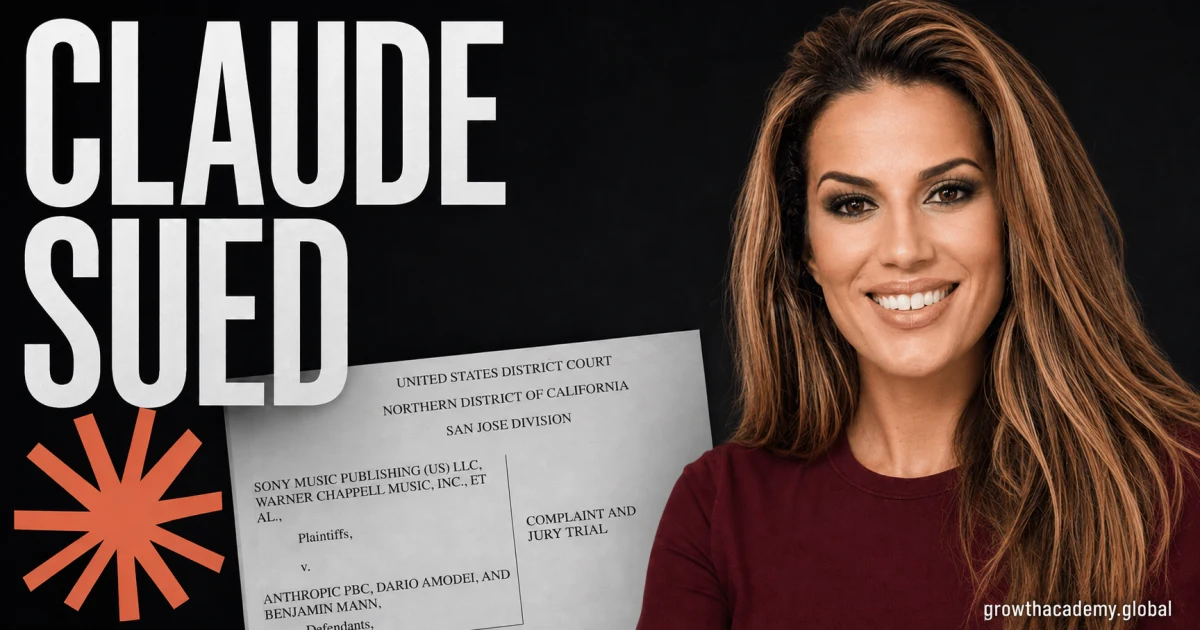
On August 29, 2026, Sony Music Publishing and Warner Chappell Music filed a federal copyright lawsuit against Anthropic in California. The complaint alleges that Anthropic illegally torrented tens of thousands of copyrighted songs to train its Claude AI models.
The works named in coverage include songs by Taylor Swift, The Beatles, Mariah Carey, and Michael Jackson. The publishers are asking for up to $150,000 per infringed copyright, plus a court order blocking future use of their works.
If you run a business on AI tools, your first reaction is probably the common one: you do not train models, so this looks like someone else's fight. That reaction deserves a careful correction rather than a dismissal.
The defendants in this case are AI companies, and nothing in the filing changes what your tools can do today. Ongoing copyright litigation still reaches you over time through pricing, product availability, vendor stability, and contract terms. Treat it as vendor risk to monitor, and keep your own AI use clean.
What Was Filed and What It Alleges
The suit landed in federal court in California on August 29, 2026. Per Axios and TechCrunch, the publishers allege that Anthropic downloaded tens of thousands of copyrighted songs through torrenting and used them as training data for Claude.
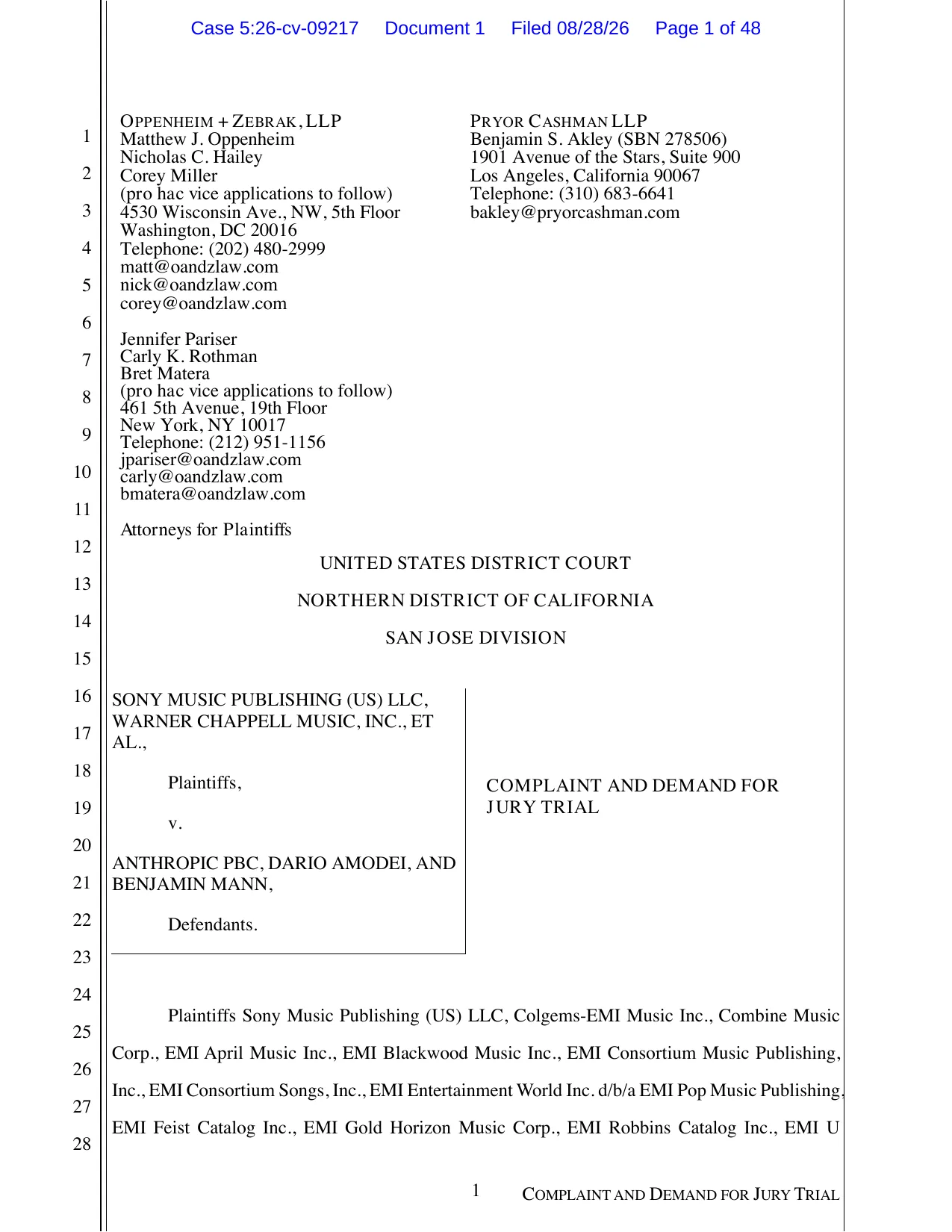
The complaint seeks statutory damages of up to $150,000 per infringed work. It also asks the court to block Anthropic from using the publishers' works going forward.
Every claim above is an allegation. A complaint presents one side's account, and courts test those accounts slowly, through motions, discovery, and sometimes trial. Nothing has been proven, and outcomes in cases like this range from dismissal to settlement to judgment.
Why the $1.5 Billion Settlement Did Not Close the Category
Roughly six weeks before this filing, a $1.5 billion Anthropic copyright settlement with book publishers received court approval. Coverage at the time widely framed it as resolving the AI industry's copyright exposure.
This new suit shows what that settlement actually closed: one claimant group, covering their works. Music publishers hold different catalogs and different claims, and they are now pressing them.
That pattern is worth remembering every time a headline declares an AI legal question settled. Settlements resolve specific parties, and the category stays open as long as other rights holders see claims worth testing.
What This Means for a Business Running AI Tools
You are outside the direct line of fire. The defendants in these cases are the companies that trained the models, and this suit follows that pattern.
The honest second half is that litigation against your vendors is a business-planning input, the same way a lawsuit against your payment processor or your hosting company would be. Four channels matter.
1. Pricing. Settlements and damages are costs, and costs tend to find their way into subscription prices over time.
2. Product availability. The publishers are asking for a court order blocking future use of their works. Court orders can shape what models get trained on and which capabilities survive.
3. Vendor stability. A vendor carrying years of litigation carries financial exposure and distraction. That belongs in the same file as its uptime record and support quality.
4. Contract terms. Indemnification language, usage restrictions, and liability caps can shift as cases resolve. The terms you accepted last year may read differently next year.
A Practical Vendor-Risk Checklist
None of this requires a legal background. It requires the same monitoring discipline you already apply to any critical vendor.
- Put AI vendors on your watch list. Track copyright litigation involving your AI providers the way you track their pricing changes and terms updates. A quarterly check is enough for most businesses.
- Read your providers' indemnification terms for AI outputs. Coverage often varies by plan tier and comes with conditions. Know what applies to your account, and bring questions about your own exposure to your attorney rather than to a headline.
- Keep your prompts clean. Avoid asking any AI tool to reproduce copyrighted works, song lyrics included. While these cases run, reproduction of protected material is the usage pattern most worth avoiding.
- Keep your own original IP in your content. Original writing, frameworks, and examples you created keep their value no matter how vendor litigation resolves. Content built on borrowed material inherits borrowed risk.
A Sober Read on Where AI Copyright Is Heading
Expect more claimant groups. The book settlement and this music filing suggest rights holders are testing their claims one group at a time, each with its own works and its own theory of the case.
Expect long timelines too. Copyright litigation at this scale runs for years, with quiet stretches punctuated by dramatic headlines.
And keep the distinction most coverage blurs: headlines report filings, motions, and settlements in progress, while outcomes arrive much later. This article makes no prediction about who wins, and you should be skeptical of anyone who does.
For your planning, the durable position looks like this: keep using the tools that work for your business, watch your AI vendors the way you watch any critical supplier, and keep your own hands clean on reproduction.
Frequently Asked Questions
Does this lawsuit change what my AI tools can do today?
No. The complaint was filed on August 29, 2026, and no court has ruled on it. Any effects on pricing, features, or terms would arrive later, through settlements, judgments, or business decisions made under litigation pressure.
Could my business be sued for using Claude or other AI tools?
The defendants in these cases are the AI companies that trained the models, and this suit follows that pattern. Your practical exposure lives in how you use outputs, so avoid prompting tools to reproduce copyrighted material and know your provider's indemnification terms. For questions about your specific situation, ask a lawyer rather than a blog post.
Did the $1.5 billion settlement resolve AI copyright risk?
It resolved claims from book publishers, one claimant group covering their works. Sony Music Publishing and Warner Chappell Music filed this separate case roughly six weeks later over music catalogs. Settlements close specific claims while the category stays open.
What should I do about this in the next week?
Add AI copyright litigation to your vendor watch list, read the indemnification language in your AI providers' terms, and confirm nobody on your team prompts tools to reproduce copyrighted works such as song lyrics.