The Complete 2026 LinkedIn Live Strategy: 10 Steps for Established Small Business Owners to Build Authority and Generate High-Ticket Leads
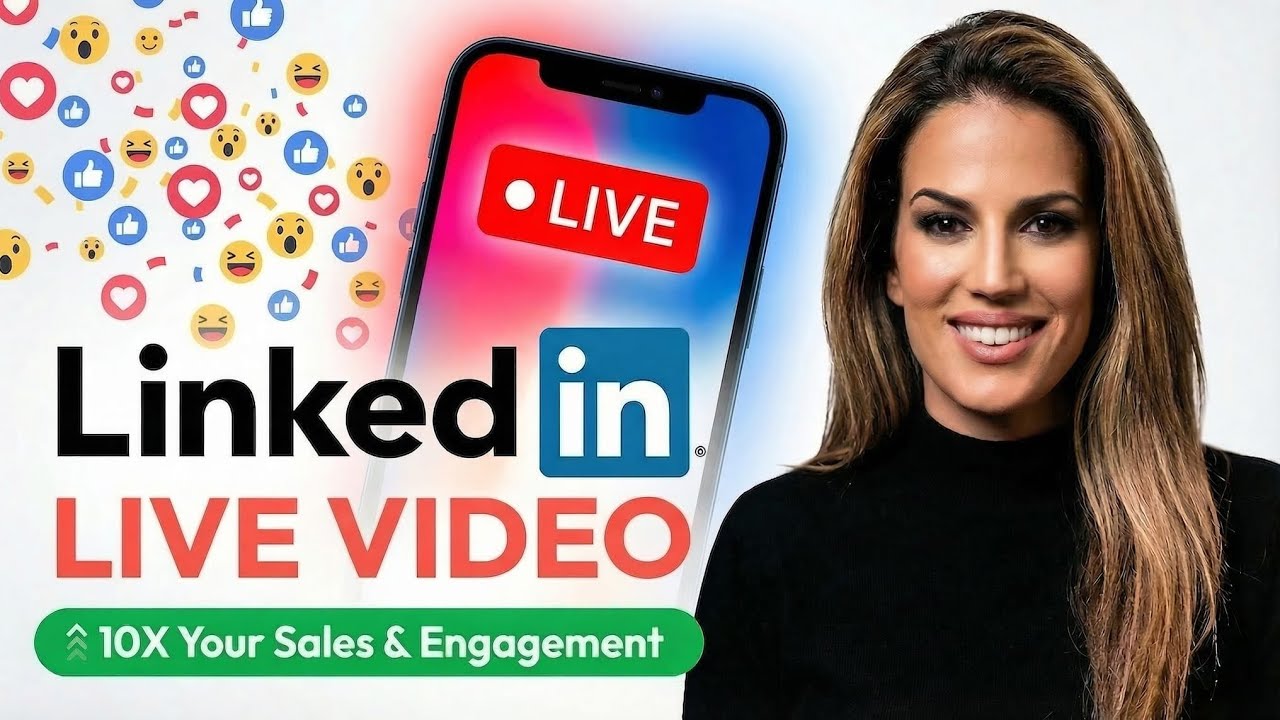
If you're an established business owner sitting on the sidelines of LinkedIn Live, watching your competitors gain visibility while you struggle with the same old content marketing tactics, this comprehensive guide will change everything.
After conducting hundreds of LinkedIn Live events and training over 100 business owners, I've discovered that live video isn't just another marketing channel—it's become the most AI-resistant medium for building genuine authority and converting high-ticket prospects in 2026.
But here's what most business owners get wrong: they treat LinkedIn Live like Instagram Stories or casual social media content. This approach kills results before you even start.
The reality? LinkedIn Live requires the preparation and professionalism of a TED Talk, combined with strategic distribution that multiplies your content's impact across months of follow-up campaigns.
This isn't about going viral or getting likes. It's about systematically positioning yourself as the definitive expert in your category while generating predictable inbound leads from qualified prospects who've been watching your content for months without engaging publicly.
Table of Contents
- Why LinkedIn Live Works in 2026
- Who This Strategy Is For
- The 10-Step LinkedIn Live Framework
- Step 1: Commit to Consistency
- Step 2: Master the Rule of One
- Step 3: Use Your Topic as a Filter
- Step 4: Execute Strategic Distribution
- Step 5: Prove Your Expertise
- Step 6: Master the Technology
- Step 7: Bring Professional Energy
- Step 8: Plan Content Multiplication
- Step 9: Analyze Like a Coach
- Step 10: Systematize and Scale
- Advanced Strategic Insights
- Case Study: Real Results
- Key Takeaways
- Frequently Asked Questions
- What's Next
Why LinkedIn Live Works in 2026
The content landscape has fundamentally shifted. While AI can generate blog posts, social media captions, and even short videos, it cannot replicate authentic, 30-60 minute live video presentations with real-time Q&A sessions.
This creates a unique opportunity for established business owners who are willing to show up authentically and demonstrate their expertise in real-time.
The numbers tell the story:
- Live video generates 10-30% conversion rates compared to 1-3% for traditional content marketing¹
- LinkedIn Live events receive 7X more reactions and 24X more comments than regular LinkedIn posts²
- 92% of mobile video viewers share videos with others³
- The live streaming market is projected to reach $345 billion by 2030⁴
But here's the critical insight most business owners miss: your highest-value prospects are watching without engaging publicly.
I call this the "dark social phenomenon." These prospects—VPs, CEOs, board directors—consume your content consistently for months or even years without liking, commenting, or sharing. They're evaluating your expertise while maintaining professional discretion.
LinkedIn Live events help surface these hidden prospects when they register for your events, giving you direct access to decision-makers who've been silently following your work.
Who This Strategy Is For
This framework is specifically designed for:
Business Stage:
- Established small business owners doing at least $5 million annually
- SMBs selling to other businesses (B2B)
- Service providers with deal sizes of $25K+ (ideally $100K-$250K for year-long engagements)
LinkedIn Presence:
- At least 2,000-4,000 quality connections on LinkedIn
- Currently active on LinkedIn and understand video marketing importance
- Looking for strategic execution rather than basic LinkedIn education
Professional Status:
- Recognized experts in their field with proven track records
- Comfortable with public speaking and presenting
- Serious about building long-term authority and category ownership
If you're just starting out or have fewer than 2,000 LinkedIn connections, I recommend beginning with my $6 30-day video challenge on YouTube to build your foundation first.
The 10-Step LinkedIn Live Framework
Step 1: Commit to Consistency
The biggest mistake I see business owners make is treating LinkedIn Live as a one-off experiment. One live video event will not transform your business. The compound effects only begin after consistent execution over 3-6 months.
The minimum commitment:
- Month 1-3: One live video event per month
- After 3 months: Expand to interview-style events, collaborations, or multiple platforms
- Ongoing: Track which live events generate the most quality inbound leads and clients
This isn't about perfection—it's about showing up regularly and improving your skills while building audience trust over time.
The hidden cost of inconsistency: Every sporadic attempt damages your authority. Your audience learns they can't rely on you for regular valuable content, which undermines the trust necessary for high-ticket sales.
Don't start unless you can commit to this timeline. Your reputation is more valuable than any single piece of content.
Step 2: Master the Rule of One
Most LinkedIn Live events fail because they try to accomplish too much. The Rule of One forces strategic clarity that directly translates to better results.
The five components:
- One goal aligned with your business objectives
- One metric of success (email list growth, inbound calls, specific view counts)
- One target audience (your ideal client profile)
- One call to action that advances prospects toward a sales conversation
- One category to own (new for 2026)
Category ownership is critical. Don't just build your personal brand—position yourself to own a specific category for a specific audience. Instead of "executive performance coach," become "the executive performance coach for attorneys." Instead of "LinkedIn marketing consultant," become "the LinkedIn live video strategist for B2B service providers."
This specificity serves you in two ways:
- It filters for exactly the right prospects during your live events
- It positions you for AI search recommendations when prospects need expertise in your niche
Your LinkedIn Live event titles must align with your category ownership goal. Every event should reinforce your position as the definitive expert in your chosen category.
Step 3: Use Your Topic as a Filter
LinkedIn is not Instagram. Your audience expects TED Talk-level preparation and expertise demonstration, not casual social media content.
Your topic title is your primary filtering mechanism. It should immediately attract your ideal prospects while repelling everyone else.
Bad example: "LinkedIn Marketing Tips for Small Businesses"
Problem: Too broad, attracts tire-kickers and DIY prospects
Good example: "Live Video Lead Generation for B2B Service Providers Selling $100K+ Contracts"
Solution: Specific filtering that attracts qualified prospects with serious budgets
The filtering benefits:
- Self-selection of ideal audience members
- Higher quality attendee registration lists
- Better conversion rates from qualified prospects
- Easier lead qualification during follow-up calls
Remember: you're not trying to maximize attendance. You're trying to maximize the percentage of attendees who are qualified prospects for your high-ticket services.
Step 4: Execute Strategic Distribution
Most LinkedIn advice tells you to carefully curate your invite list. This creates a scarcity mindset that kills your reach potential.
The counterintuitive approach: Invite broadly but filter ruthlessly through your title.
The invitation strategy:
- Invite 1,000 people per week (LinkedIn's 4,000 total capacity)
- At least 30% should be your ideal client profile based on LinkedIn profile analysis
- Don't over-filter manually—let your title do the qualification work
- Target: 500+ registered attendees leading to 100+ live viewers
Pre-live distribution sequence:
- Use your LinkedIn newsletter to reach beyond first-degree connections (LinkedIn Live only allows first-degree connection invites)
- Send reminders: 3 weeks before, weekly leading up, daily for 3 days before
- Share preview content that builds anticipation without giving away your main frameworks
The success funnel:
4,000 invites → 500+ registered → 100+ live viewers → 5+ qualified calls → 2+ new clients (assuming 40% close rate)
This approach maximizes discovery while maintaining quality—something manual curation cannot achieve at scale.
Step 5: Prove Your Expertise
High-ticket buyers are not looking for basic education. They already know they need solutions in your area of expertise. What they're evaluating is whether you're the right expert to solve their specific problems.
What your audience wants:
- Facts, data, and frameworks they haven't seen before
- Unique perspectives and bold beliefs backed by experience
- Specific case studies with real numbers and outcomes
- Strategic insights that demonstrate deep understanding of their challenges
What kills your authority:
- Regurgitating common knowledge available in any Google search
- Trying to convince people they need what you offer (they already know)
- Sharing superficial tips and tricks without strategic context
- Generic morning routines or basic productivity advice
The expertise demonstration framework:
- Share a contrarian belief backed by your experience
- Provide the data or case study that led to this belief
- Walk through the specific framework you developed
- Give concrete examples of implementation and results
Your goal isn't to educate—it's to demonstrate that you think about their problems more deeply and strategically than anyone else they're considering.
Step 6: Master the Technology
Technical difficulties during live events destroy your authority faster than any other single factor. The solution isn't perfect equipment—it's thorough preparation.
Recommended platforms:
- Streamyard (user-friendly, reliable)
- Restream.io (advanced features for multi-platform distribution)
Pre-live technical checklist:
- Test your complete setup 2-3 days before the event, not 15 minutes before
- Check microphone and camera connections
- Verify internet stability during peak usage hours
- Plan your background (clean and professional, avoid fake backgrounds that decrease trust)
- Have backup plans for common failure points
"Tech fear" isn't really about technology—it's anxiety about judgment at scale. The upstream problem is perfectionism disguised as technical concern. People who say "I need better equipment first" are actually saying "I need bulletproof reasons why failure isn't my fault."
The technical barrier is a psychological safety mechanism. Once you diagnose it correctly, the solution isn't better software—it's accepting imperfection publicly and focusing on value delivery over production quality.
Start simple, improve over time, and remember that your audience cares more about the value of your content than the perfection of your production.
Step 7: Bring Professional Energy
Your energy level during live events directly impacts both immediate engagement and the quality of content clips you'll create for ongoing distribution.
Performance mindset essentials:
- Treat each live event like a keynote presentation, not a casual conversation
- Show genuine enthusiasm for your topic (if you seem bored, your audience will be too)
- Remember this becomes a 30-90 minute asset for months of content distribution
- Your energy in clips determines their viral potential and engagement rates
Energy preparation strategies:
- Plan your most important points for when your energy is highest (usually first 20 minutes)
- Use physical movement and gestures to maintain vocal energy
- Schedule events when you're naturally most energetic (morning vs. afternoon preference)
- Have water nearby but avoid excessive drinking that creates bathroom urgency
This isn't about being "fake energetic"—it's about bringing your best professional self to a performance that represents months of work and relationship-building.
Step 8: Plan Content Multiplication
Most people treat live video as the end product. This backwards thinking wastes 90% of your content's value.
The correct sequence: Plan distribution first, then create live content structured for easy repurposing.
Content multiplication framework:
One 60-minute live event should become:
- 4-6 video clips for LinkedIn, YouTube, and other platforms
- 2-3 newsletter topics with expanded insights
- 6-8 individual LinkedIn posts
- 1-2 podcast episode topics
- Multiple quote graphics and carousel posts
During the live event, create natural break points:
- Announce when you're starting a new framework or case study
- Use transition phrases like "The second strategy is..." or "Here's what most people get wrong..."
- Pause after making bold statements to let them land (these become quotable moments)
- Summarize key points periodically (these become standalone clips)
Planning distribution before going live changes how you structure content during the event, making repurposing seamless rather than forced.
Step 9: Analyze Like a Coach
Skipping replay analysis creates invisible skill debt—you repeat the same mistakes without knowing it while your competitors improve with each event.
The coaching framework:
- Watch your replay within 48 hours (before emotional distance makes analysis less accurate)
- Use AI to analyze your transcript for patterns and improvements
- Ask specific questions: "What are my strongest frameworks? Where did I lose energy? What messaging resonated most with my ICP?"
- Identify filler words, energy dips, and moments when you seemed less confident
AI assistance guidelines:
- Use AI to organize and analyze your original thoughts, not to generate new content
- Focus on pattern recognition rather than content creation
- Maintain your authentic voice while leveraging AI for objective feedback
What to track over time:
- Which topics generate the most inbound calls
- Energy patterns and how they correlate with audience engagement
- Specific phrases or frameworks that prospects mention in sales calls
- Technical or delivery issues that repeatedly surface
The hidden cost of not coaching yourself is staying mediocre while your competitors systematically improve their authority and conversion rates.
Step 10: Systematize and Scale
After mastering the basics, systematization allows you to scale impact without proportionally increasing time investment.
Operational systematization:
- Schedule your next live event immediately after each current event ends
- Develop templates for invitations, follow-up sequences, and content repurposing
- Create standardized processes for technical setup and content preparation
- Build a content calendar that supports your live events with related material
Scaling opportunities after 6+ months:
- Interview-style events with industry leaders
- Collaborative events with complementary service providers
- Multi-platform simultaneous broadcasting
- Advanced lead nurturing sequences triggered by event attendance
Long-term strategic benefits:
- Improved speaking skills lead to podcast invitations and conference speaking opportunities
- Industry recognition as the go-to expert in your category
- Reduced risk for event organizers when inviting you to their platforms
- Protection against algorithm changes and platform dependency
This systematic approach compounds over time, creating sustainable competitive advantages that are difficult for competitors to replicate.
Advanced Strategic Insights
The AI-Resistant Authority Strategy
While AI continues to commoditize written content and even short-form video, authentic live video for 30-60 minutes with real-time Q&A remains nearly impossible to replicate artificially.
This creates a unique opportunity for business owners who master live video now. As more content becomes AI-generated, the value of provably human, authentic expertise demonstrations will increase exponentially.
Strategic positioning for AI dominance:
- Own specific categories where human experience and judgment are irreplaceable
- Develop frameworks that require real-world implementation knowledge
- Build relationships through live interaction that AI cannot replicate
- Create content that explicitly draws from your unique professional background
The Dark Social Phenomenon
Your highest-value prospects often watch your content for months or years without engaging publicly. This "dark social" behavior is especially common among senior executives who must maintain professional discretion.
Why high-level prospects don't engage publicly:
- Colleagues and competitors monitor their LinkedIn activity
- Public engagement signals potential dissatisfaction with current solutions
- Board members and stakeholders may misinterpret engagement with service providers
- Industry positioning requires appearing self-sufficient and in control
How LinkedIn Live surfaces dark social prospects:
- Event registration reveals long-term content consumers
- Private follow-up conversations convert silent followers
- Direct relationship building without public exposure
- Qualification of prospects who are actively seeking solutions
Understanding this phenomenon changes how you measure success. Low engagement doesn't indicate low interest—it often indicates high-level prospects evaluating your expertise privately.
Category Ownership Over Brand Building
The old model focused on building personal brand awareness first, then finding your niche. The 2026 model reverses this sequence: own a specific category for a specific audience, then use that ownership to build broader brand recognition.
Why category ownership works:
- AI search algorithms recommend specific experts for specific problems
- Prospects can easily explain your value to colleagues and decision-makers
- Pricing power increases when you're the definitive expert in a narrow field
- Referral sources know exactly when to recommend you
Implementation strategy:
- Choose a category intersection: your expertise + specific audience + specific outcome
- Ensure your chosen category requires skills that AI cannot replicate
- Develop proprietary frameworks and methodologies for your category
- Consistently reinforce your category ownership through all content
Case Study: Real Results
Background: Medical sales rep career coach helping sales professionals advance to leadership roles.
Challenge: Target audience cannot publicly admit job dissatisfaction or career advancement needs on LinkedIn without risking their current positions.
Strategy Implementation:
- Rule of One: Focus solely on "career advancement for medical sales professionals" with specific revenue and leadership metrics
- Topic Filtering: Event titles like "The Hidden Leadership Skills Medical Sales Directors Look for in Promotions"
- Dark Social Targeting: Invitations to medical sales professionals at manager level and above
- Content Strategy: Focus on leadership development and industry advancement rather than job search tactics
Results after 6 months:
- 4 LinkedIn Live events with average 150 registered attendees, 75 live viewers
- 12 qualified calls from prospects who had been following content for 6+ months
- 5 new clients with average contract value of $75,000 (career coaching and leadership development programs)
- 2 corporate training contracts with medical device companies ($150,000 combined value)
- Industry recognition as go-to expert for medical sales career advancement
Key success factors:
- Understanding that prospects needed private pathways to engagement
- Focusing on advancement rather than dissatisfaction messaging
- Consistent demonstration of deep industry knowledge
- Professional approach that matched audience's corporate environment
This case demonstrates how strategic topic filtering and understanding of dark social behavior can generate substantial results even when prospects cannot engage publicly with career-related content.
Key Takeaways
- Commit to consistency before starting. One live event won't change your business; systematic execution over 6+ months will.
- Use the Rule of One to maintain strategic focus. One goal, one metric, one audience, one call to action, one category to own.
- Let your topic filter your audience. Broad appeal reduces conversion rates; specific filtering attracts qualified prospects.
- Invite broadly but filter through titles. Manual curation limits reach; strategic titles maintain quality while maximizing discovery.
- Prove expertise rather than provide education. High-ticket buyers want strategic insights, not basic information they can Google.
- Master technology through preparation, not equipment. Technical problems destroy authority; thorough testing builds confidence.
- Plan content multiplication before going live. One event should become 15-20 pieces of distributed content through strategic structuring.
- Analyze performance like a coach. Systematic improvement separates professionals from amateurs in authority building.
- Understand dark social behavior. Your best prospects often watch without engaging publicly; LinkedIn Live events surface these hidden followers.
- Own categories, don't just build brands. Specific category ownership creates AI-resistant positioning and premium pricing power.
Frequently Asked Questions
Backup strategies:
- Mobile hotspot for internet backup
- Headphone microphone as audio backup
- Ability to continue without slides if screen sharing fails
- Pre-written transitions to handle brief technical interruptions gracefully
Address problems quickly and professionally, then return focus to value delivery.
Leading indicators:
- Registration numbers and audience quality
- Live viewership and engagement rates
- Follow-up call bookings within 48 hours
- Content engagement on repurposed clips
Lagging indicators:
- Sales calls generated within 30 days
- New client acquisitions within 90 days
- Average deal size from live-generated leads
- Industry recognition and speaking opportunities
Calculate cost per qualified lead and lifetime customer value to determine true ROI.
Platform adaptation strategies:
- LinkedIn: Professional insights with clear business applications
- YouTube: Educational content with broader appeal
- Email newsletters: Deeper dives into frameworks mentioned in live events
- Podcast appearances: Conversational exploration of your frameworks
What's Next
LinkedIn Live is not just another marketing tactic—it's a strategic competitive advantage that becomes more valuable as AI commoditizes other forms of content marketing.
The business owners who master this medium in 2026 will establish authority and generate leads while their competitors struggle with increasingly ineffective traditional content strategies.
Your next steps:
- Evaluate whether you meet the prerequisites for this strategy (established business, 2,000+ quality LinkedIn connections, high-ticket B2B offers)
- Choose your category ownership positioning using the Rule of One framework
- Schedule your first live event for 30 days from now to force preparation and commitment
- Begin building your invitation list and content multiplication strategy
Remember: the compound effects of consistency only begin after your third event. Commit to the full timeline before starting, and prepare to see substantial results after 6 months of systematic execution.
The question isn't whether live video will become more important—it's whether you'll master this skill before your competitors do.
Ready to dive deeper? Visit my YouTube channel for the $6 30-day video challenge if you need to build your foundation, or connect with me on LinkedIn (S-H-A-N-A-E-M-O-R-E-T) for advanced LinkedIn strategies.
The time to start is now. Your future clients are waiting to see if you're serious enough about your expertise to demonstrate it live.
About the Author
Shanae Moret has built an audience of nearly 1 million LinkedIn followers and conducted hundreds of LinkedIn Live events. She has trained over 100 business owners in live video strategy and created 25+ multi-day challenges reaching thousands of entrepreneurs worldwide.
As a recognized expert in LinkedIn live video for business owners, Shanae has developed proprietary frameworks that help established SMBs generate predictable inbound leads from high-ticket prospects. Her strategies focus on AI-resistant authority building and category ownership for serious business professionals.
Connect with Shanae on LinkedIn or subscribe to her YouTube channel for ongoing LinkedIn strategy insights.
Sources:
¹ HubSpot State of Video Marketing Report, 2026
² LinkedIn Marketing Solutions Internal Data, 2025-2026
³ Wyzowl State of Video Marketing Report, 2025
⁴ Grand View Research Live Streaming Market Analysis, 2025
This post contains strategic frameworks developed through real-world implementation with over 100 business owners. Results may vary based on industry, execution quality, and market conditions.
Watch the full session:
Open YouTube Live